

2026 is Japan time. After having been back to Asia in 2025 for the first time in over 13 years with my mongolian-chinese trip, we decided this time to go one step further and explore the land of the rising sun. Since this was our first time in the country, we opted for the classic, “introductory” Japanese itinerary that consisted in the following stops: Tokyo, Hakone, Lake Kawaguchi, Kyoto, Nara and Osaka before flying to tropical Japan in the Okinawa prefecture. Last but not least, we visited the capital of Taiwan, Taipei, where we ended our journey and sadly also our 2026 summer. Japan is extremely culturally rich and that it is something I found out doing my research before leaving and once I was there. The music of a giant like Haroumi Hosono kept me company during my journey and made me dream about my final destination Ishigaki with albums like Pacific or Tropical Dandy. The recurrent myth that japanese have for the tropics, with the biggest japanese community outside Japan located in Brazil, can also be felt in Takanaka Brasilian Skies which is quite a contrast in comparison with the more introspective atmospheres of the soundtracks of Ryuichi Sakamoto. When the night comes down in Japan and light leaves space to dark, the best thing to do is to visit a Jazz kissa and start to listen to standard Jazz, with great artists including the locals Ryo Fukui and Toshiko Akiyoshi (and her pals of course). Jazz is also a recurrent theme in Haruki Murakami's novels, in particular in the one I like the most Kafka on the Shore. Murakami also often quotes his masters: Yukio Mishima and his resistance towards the westernation of Japan, the silent Snow Country of the nobel price Yasunari Kawabata, the constant suicidal thoughts of Osamu Dazai and the erotic obsessions of Jun'ichirō Tanizaki.
So where are Japanese people originally coming from? To make it really simple, we have to go back almost 40.000 years ago when the first migrations came from China, Korea and south-east Asia. During a more recent Japanese era, civilization started to spread and the so-called Jomon culture flourished (literally 'cord-marked' because of the regular pattern over various artifacts and pottery). Jomon people lived in pit dwellings and they were mostly living off fishing and plant foraging. They looked very different from actual Japanese and also probably looked very different between themselves. Between 1000 and 300 BCE another wave of migration from mainland Asia strongly shaped Japanese population, bringing extra technological skills and tools and creating a more stratified, slightly more advanced society. This was the beginning of the Yayoi period, a period that brought to Japan a huge amount of progress in many different ways. Jomon people can be seen as the ancestors of Ainu, a group of people from Hokkaido and the northern part of Japan from the XII century, representing a distinctive minority from the rest of the population, the Yamato people, that include 98% of modern Japan. Jomon/Ainu are considered one of the oldest populations in the archipelago, and during the imperial period they had to shrink their living space drastically because they were forced to live in reserves and nowadays their population is made only of tens of thousand individuals.
"Everything is a God, you included". I was talking with the lady in charge of the accommodation where I stayed in Hakone about the strong propensity for phallic statues I believe Japanese culture has. You might ask yourself: what do I, phallic statues and God have in common? The answer is what I think she was trying to tell me. In Shintoism everything and everyone is inhabited by a sacred energy called kami, a sort of living decentralized God that makes everything alive including me, you, phallic statues and the lady at the counter I talked to. Shintoism is the indigenous religion of Japan and it is nowadays still widely practiced. It has been introduced to the country during the Yayoi period in 300 BC and in its core it focuses on harmony with nature, respect for ancestors and purity (that could also explain the obsession Japanese people have for cleanliness). Another vital element of a shintoist shrine is the torii gate (literally bird perch), the main entrance, the gate that perfectly represents Japan and can be seen everywhere, including mountain paths, forests and villages. It marks a sort of imaginary door between the ordinary and the extraordinary world (Ke/Hare) and purity can be also obtained by simply walking under it and practising a worship routine.
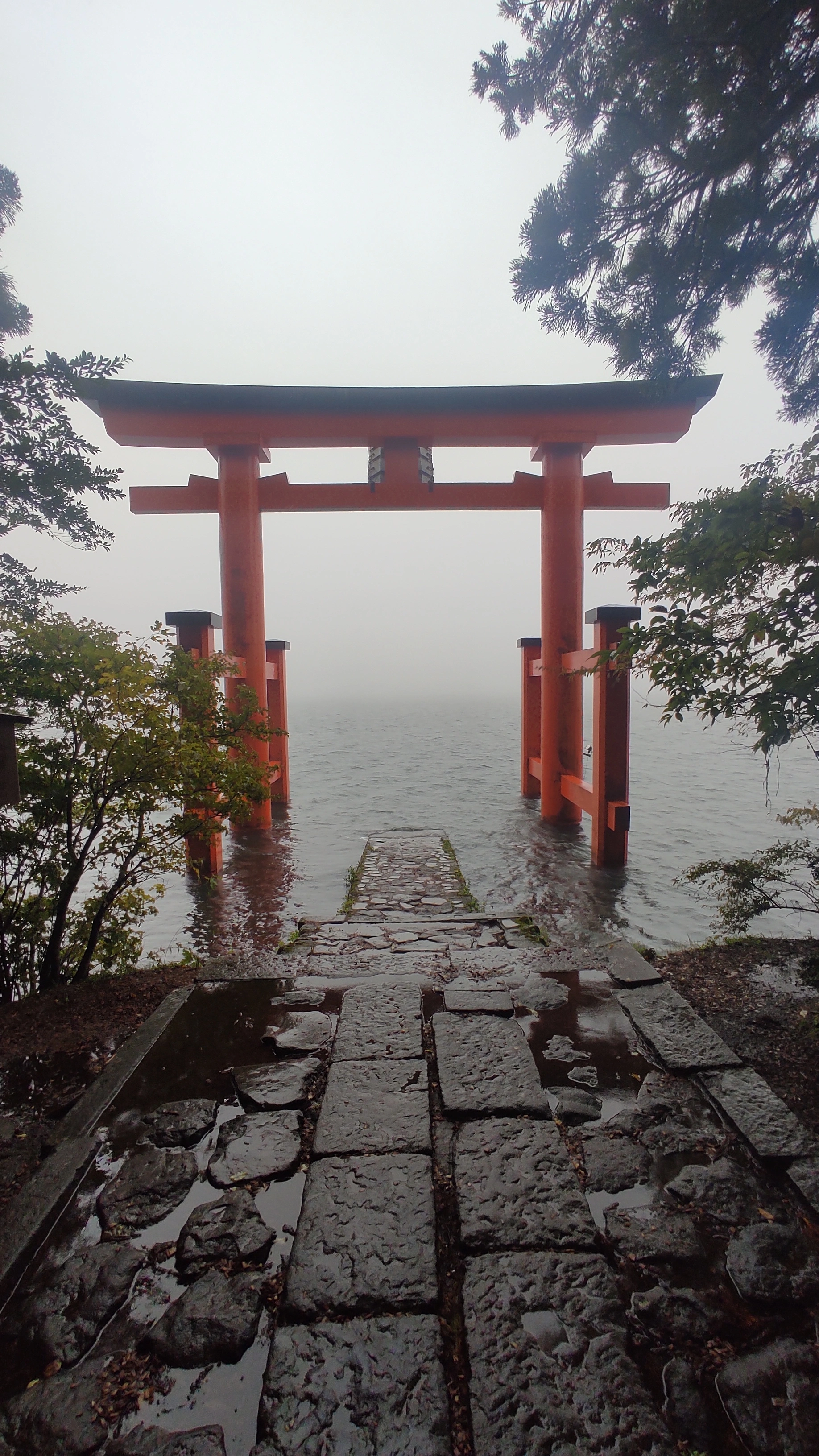
Our short stay in Hakone was mostly steeped into a certain grey, rainy and foggy vibe that made that part of Japan a bit more mysterious than the usual. The small and busy roads that connect this sort of natural cradle that sits inside a former vulcano with the rest of the world, are shaped like some of the roads in the Italian Alps and that made me feel like I was in a strange but well-known place. Our room was located exactly over one of those roads and just in front of it, there is a charming, classy and historical hotel called the Fujiya hotel. The place was built in 1891, part of an era when Japan wanted to look like its western counterpart and one of the way to do it, was to build a western-look-alike hotel in the middle of a thermal town. Although we knew the price of the hotel was somehow prohibitive, we decided to venture inside and after having crossed a beautiful Japanese garden, we entered the property. Between the famous people that had the luck to sleep in this iconic place there are John Lennon & family, Albert Einstein, Chiang Kai-shek and I believe many other important people. Once inside we decided to head to the dark, wooden, half illuminated and half empty bar where we could breath-in all the atmosphere the place can offer while sipping a whisky sour meticulously made by the bartender. While sitting in this sort of Hopper painting scene, the first analogy that came into my mind, was the resemblance that the place has with the Gran Hotel Bolivar of Lima, where people can experience an extraordinary Pisco sour in a place that saw Ernest Hemingway, Orson Wells, the Rolling Stones and an endless number of celebrities sitting at the same bar.
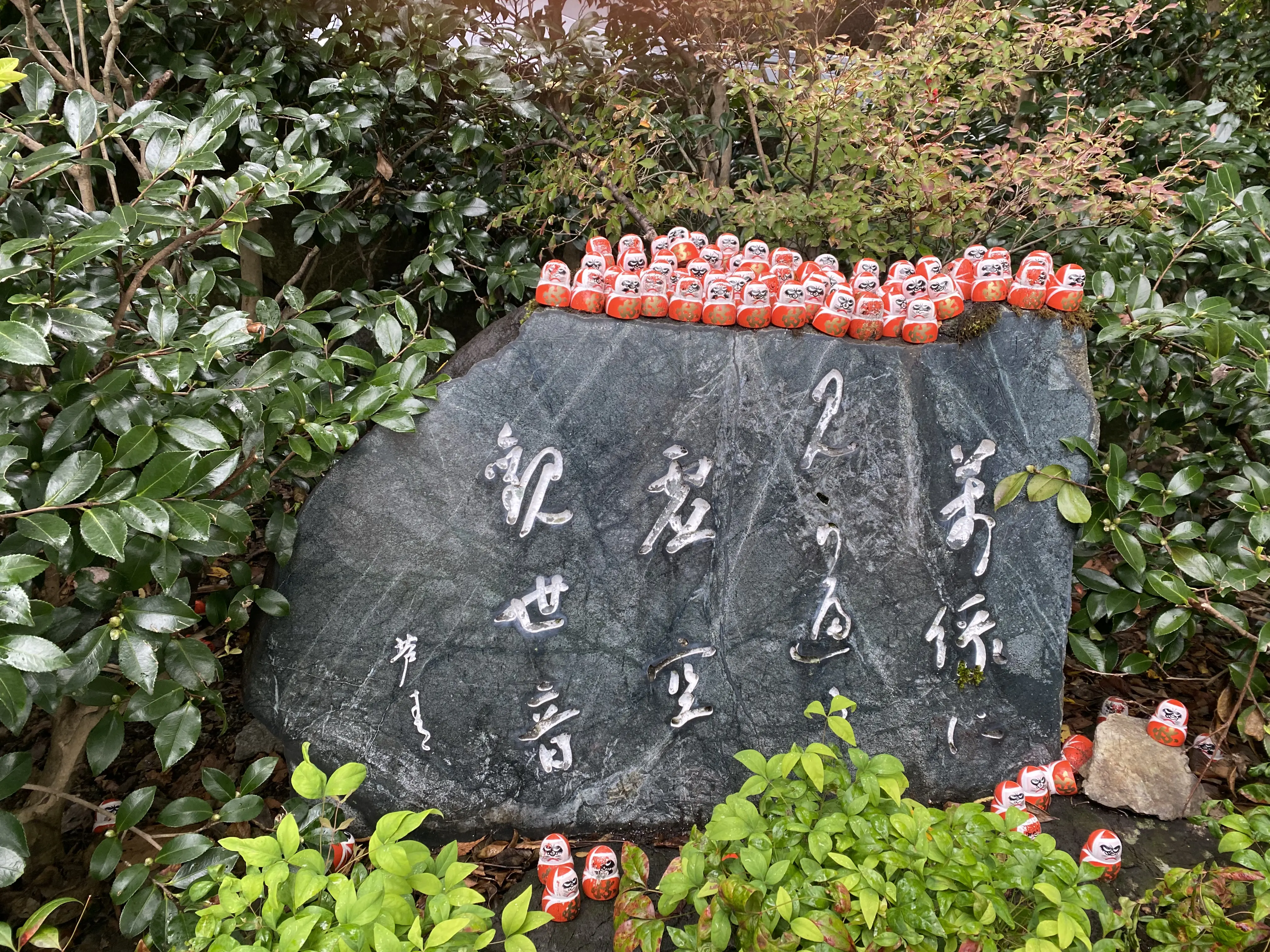
Mahayana Buddhism is translated as the great vehicle, the widest branch of Buddhism in the world that covers almost 50% of all practitioners. It started in India around 1BCE and spread to eastern Asia, due to its versatility, its capacity to integrate itself with other philosophies such as Shintoism and the presence of certain infrastructures like the Silk road that obviously facilitated cultural exchanges between different cultures. In its core ideas, there are certain concepts like the one of Bodhisattva, the representation of the ultimate savior that anyone should aim to be, the last sailor to leave the boat, after all the humans have been saved. In Mahayana all things are interconnected to themselves and things only work in function of what it is next to them. This concept is called Sunyata and it is another core idea of Mahayana. Nirvana is there and it is accessible to everyone and in order to reach it, individuals should only focus on the entire universe full potential and not on themselves only. Basically either all or none. While in Japan I noticed a massive presence of Zen temples and in particular I was particularly intrigued by a little doll I spot in different sites called Daruma. The Daruma dolls are the depiction of the monk Bodhidharma, the founder of zen. Bodhidharma is a mysterious Indian-born figure, mostly famous for its intense non-stop zen practices that according to the legend lasted up to 9 years and included an eyelid cut off in order not to fall asleep during his practicing and lose the whole purpose. Darumas are paper round doll of different colors but mostly red that simply do not fall on one side because of their round base (okiagari). Initially the dolls are left with blank eyes and only one eye, the left, has to be painted with the intention of having a clear goal in mind. The second eye can eventually be painted one year after only if the target goal is reached and at the end of its annual circle, Darumas have to be burned. While in Osaka, I had the time to visit one of the Zen-Buddhist temple covered with Daruma dolls all over the place called Katsuo-ji. The temple is located in the middle of the mountains and to explore it all, it requires around one hour. The way locals express their general wish or a wish for an upcoming victory of different kind can be noticed although the area is pretty popular between tourist but visiting the temple is definitely a way to sparks curiosity about the subject.
The Meiji restauration started in 1868, fueled by Japanese samurai with the intention of overthrow the Shogunate for various reasons, including economical difficulties. The Meiji government wanted to restore imperial power and using Shintoism was a way for the state to build a sort of Japanese identity around religion. During the Shogunate, Buddhist temples assumed a vital role that went beyond pure religion. Temples were the center of the social and administrative life involving also educational purposes but the situation changed drastically during Haibutsu Kishaku, a period when the Emperor ordered the demolition of thousands of temples to stand against something that represented the corruption of the feudal order. During this era of political shift Buddhism went through hard times but there was an american man that took the cause of Buddhism preservation very seriously and his name was Ernest Fenollosa. Fenollosa was an american professor at the University of Tokyo that had a certain credit as intellectual in an era when Japan tried hard to resemble the western empires. He spent many years actively trying to raise awareness about the topic, contributing to create the first national inventory of Japanese art and helping founding the first Japanese art school. Fenollosa finally succeded in his task to institutionalize Japanese art and to elevate the national aesthetic and persuade the government of the brutality of its action.
What is the exact translation of Buddhism zen into art? To answer this question, there is no other way than to look at the work of Sesshū Tōyō. Tōyō was the absolute master of ink painting (suibokuga) strongly influenced by his many trips to China (for a total amount of roughly three years time), when he learnt from distinctive chinese styles and developed a unique viewpoint on the topic. Sesshū frequented buddhist temples since his childhood and joined Shōkoku-ji temple at the age of twelve, eventually becoming a zen monk. During his time abroad, the painter had to confront himself with the unfamiliarity of vast spaces of the chinese territory, a huge breaking point compared to the japanese archipelago and that was very inspiring for his art, moving him towards different subjects more nature-oriented like mountains, valleys and rivers. Generally speaking, the works of Sesshū Tōyō look like blank ink minimal paintings and that is why his art can be associated with the principles of zen buddhism that most of all predicts simplicity over all. Tōyō works were very much considered also after the monk's death, having become a precious source of inspiration for many painters throughout the next centuries.
Momoyama was for Japan a 30 years period of transition from chaos to stability. Preceded by the Sengoku period (literally the 'warring state period') that lasted until 1568, the Momoyama age saw the 'last fireworks' being shot from dominant leaders like Oda Nobunaga first and Toyotomi Hideyoshi afterwards that completed the military conquest or unification depending on the point of view and took Japan into an era of stability, peace and isolation for the next 250 years. This era also involved a big artistic development and saw the beginning of cultural habits like the tea ceremony, strongly influenced by zen Buddhism and Shintoism. Momoyama art was a bit of a contradictory artistic era because it saw strongly decorative intentions on one side to display the majesty of the daimyos, something similar to Art nouveau in Europe, and the minimalistic zen approach on the other hand. The themes of Momoyama paintings shifted from the urban views of Edo, Osaka and Kyoto to more idyllic, harmonious view involving fishermen, farmers and country people in general.
The most famous Japanese pop-icon is certainly the great wave of Kanagawa. The representation of a great "monster wave" showing its claws and almost-hitting three boats of fishermen during their way out of Edo (the actual Tokyo) in the prefecture of Kanagawa stands literally everywhere around the globe in different copies and printings including t-shirts, bags, bed-sheets and many other places. The artist behind the masterpiece is Sir Katsushika Hokusai (1760-1849), a specialist in ukiyo-e art. Ukiyo-e which literally means 'picture of the floating world' is an art form based on carving wood and creating a sort of unique printing block that can then be adjusted and reprinted multiple times. This form of art was famous during the Edo period, an era of rapid economical growth when a strong emphasis on design and decoration could be felt in Japan. The picture is the most famous take of a serie of 36 pictures produced from 1830 to 1832 that have undoubtely the mount Fuji as the main subject. Although my own experience by the time I was around mount Fuji was everything but exciting, since the fog and the rain completely forbid me to see and climb the great mountain during all my stay despite my careful planning, I have to say that the holy atmosphere of those regions can still be sensed somehow and walking around the lake region has been a pleasure despite of all. These vulcanic lands also contribute to create a unique microclimate that surely inspired various artists back in time. The use of blue in particular in the great wave of Kanagawa was very innovative for the era and it also contributed to generate interest in Europe in japanese art, as a part of phenomenon called Japonisme.
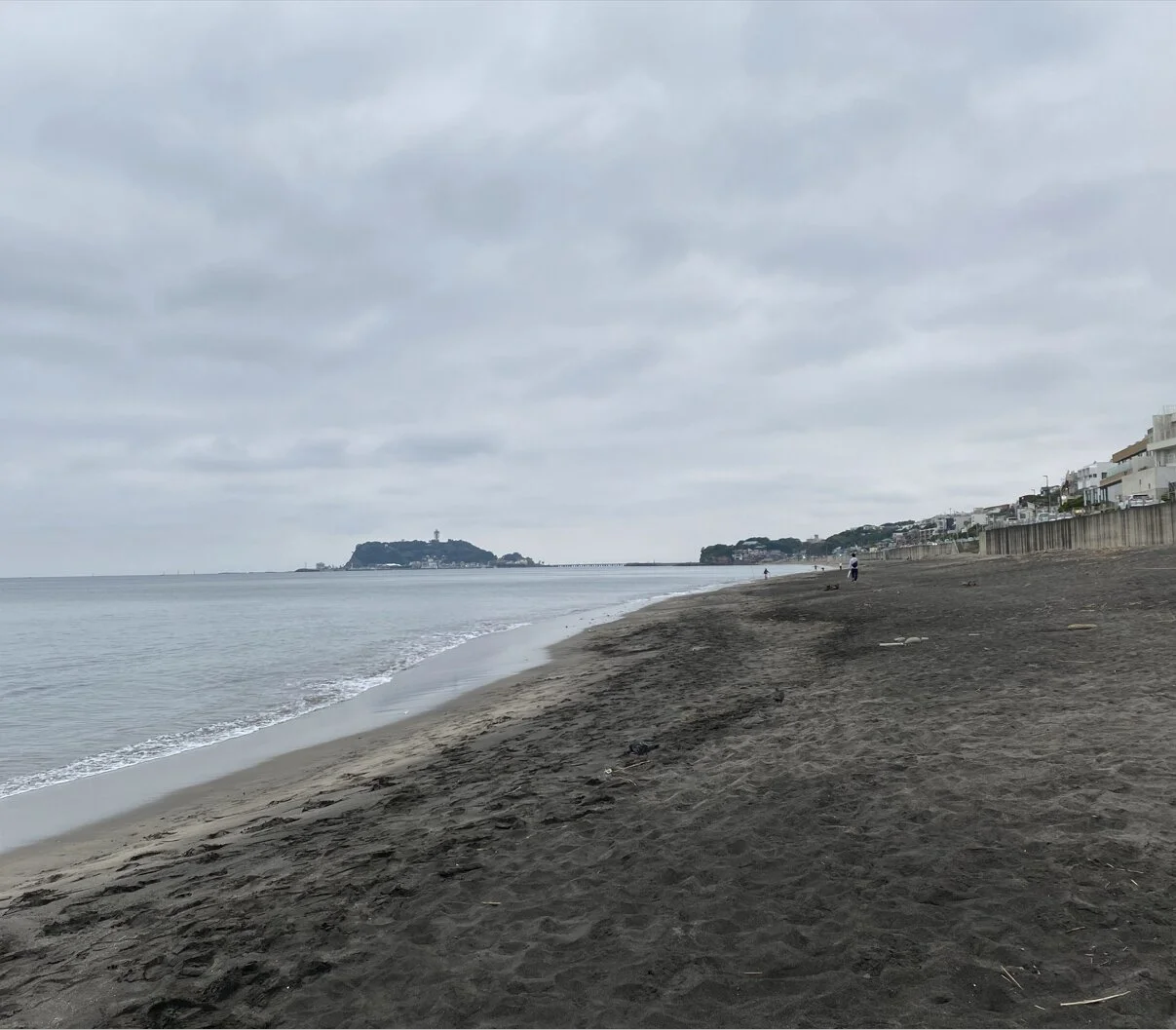
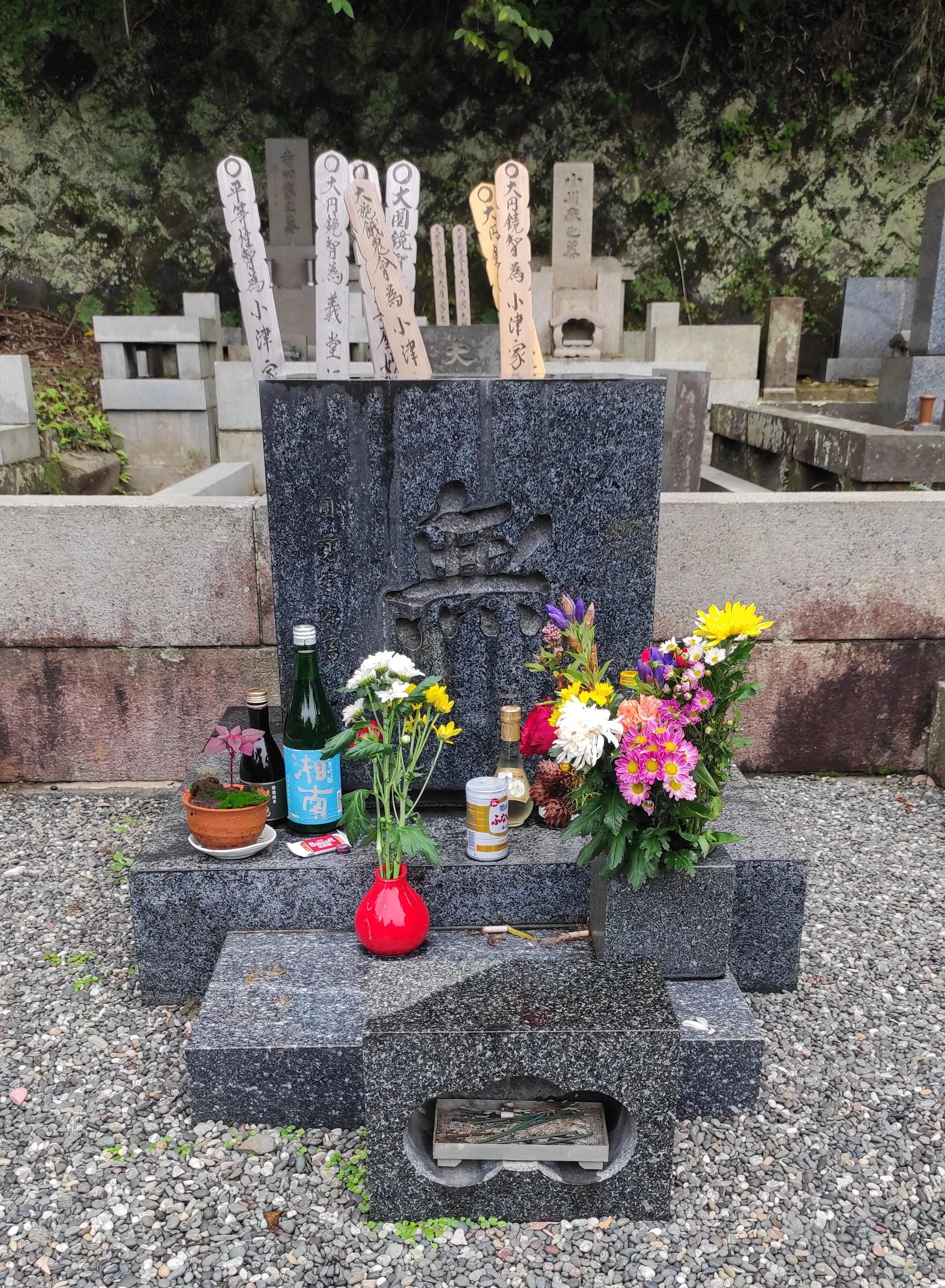
Yasujirō Ozu is probably the greatest film maker Japan ever had. Ozu's career spanned over three decades including a world war where he actively took part, spending two years in China during the Japanese-sino war. Ozu originally came from a big family of merchants and his interests for movies comes from early age. The topics of his production mostly rotate around intergenerational intimate human relationships, especially between family members and the role of women in society, topics explored by the director through a very structured narrative plot. Some of his mostly acclaimed movies are 'Late Spring' (1949), 'Tokyo Story' (1953) and 'An Autumn Afternoon' (1962), all part of the Noriko trilogy featuring the great Setsuko Hara and Chishū Ryū. Ozu's works became influential for his unique style that did no conform with the Hollywood standards in particular for the use of a peculiar camera shot called Tatami shot, where the camera is placed in an unconventional low-medium height, depicting the characters in the middle of the picture like if the viewer is kneeling down on a Tatami mat and the frequent use of frontal shots that puts the actor directly in front of the audience in what I would say recalls the attempt of Bertold Brecht to break the fourth wall. Another innovative element of Ozu's view is the refusal of melodrama in sensible/everyday-hard-to-deal-with aspects of life like the aging process, which are generally always shown through characters with good mood. Between the many world wide famous filmmakers who paid tribute to Yasujirō Ozu, there is also the universal Wim Wenders (one of my fav) with his documentary film Tokyo Ga (1985). During my time in Kamakura I decided to pay hommage to the director by going to visit his grave in the Engaku-ji buddhist temple. The temple is a beautiful site and the cemetery lies a little bit more up in the mountain. The grave is hard to find because there are no clear elements that allows the visitor to distinguish it from all the other graves. Ozu never married and lived his whole life with his mother, which is also the person is sharing his grave with. On the tombstone, there is one single beautiful character 'mu' with a strong philosophical meaning in both Tao and Buddhism which can be translated with 'nothingness'.
Generally speaking the cultural world in Japan after WWII has always been an unstable balance between tradition and modernity, between a former, rigid, untouched and structured past and a more dynamic, compromised and sparkling present. Certain forms of art stand on one side, certain on the other and those that were left in the middle had to deal with an inner contradictory nature in order to express themselves. Butoh is a sort of demoniac dance that belongs to the third category, rejecting both the other two. It is an act where soul takes complete control over body, where sexuality, freedom and perversion are extremely emphasized and where the body is left free to express itself and impress those who do not know about it. In the first instance the movement sought to draw a clear line from previous forms of theater like Kabuki, getting closer to something more European like German expressionism but in a second stage the roots with its Japanese cultural past emerged and the style evolved in something else more eastern called Tohoku Kabuki. The founder and main promoter of Butoh is Tatsumi Hijikata that in the late '60s with the founder Kazuo Ohno decided to put up the show and write the Butoh manifesto by being mostly inspired by french surrealism, the writing of Yukio Mishima (especially by a novel called Kinijiki literally 'Forbidden colours'), the Marquis de Sade and Jean Genet in particular. Butoh became prominent also in Europe after extensive touring and because of its shocking and trasgressive attitude found a lot of followers also in other countries and it is nowadays still widely considered in various parts of the globe.
Tohoku is one of the wildest region in northern Japan because of its isolation and its bad weather. From the V century the land has been partly inhabited by an indigenous group of people called Emishi that had a strong animistic belief which involved the reciprocal correlation of every living being of all forms. Emishi shared their land with Yamabushi mountain monks that populated the surrounding mountains practicing extremely harsh rituals and actively spreading folk stories with the local population. These factors helped to create a tradition made of various supernatural entities called Yōkai that became more popular during the years and was discovered by the big public through the book of Shigeru Mizuki Tōno Monogatari (the legends of Tono). The book written in 1910 is a vignette collection of approximately 120 short oral traditional stories featuring Yōkai like Kappa, a mean anthropomorphic creature, a sort of river monster with a hollowed-out head full of water that tricks living beings into deep open water spaces in order to drown them. Tohoku folklore has a very active part also in modern Japan. In nowadays culture there are lots of example of works inspired by it, in particular different manga and some of the movies of the famous Studio Ghibli founded by Hayao Miyazaki.
With the arrival of the navy officer Matthew Perry, Japan saw a fast increase in its process of westernization. Perry was sent to Japan multiple times with the intention of establishing relations between US and Japan, first with diplomacy and in case that was not working with the use of force and entered the country without an initial legal permission granted from the Japanese authority. Up until then, Japan was a state of absolute economical and cultural isolation from the rest of the world, a country governed by the Tokugawa Shogunate into a feudal system with the Shogun on top if it, followed in the pyramid by Daimyo and Han. The unfair treaties that Japan obtained led to a sort of internal rift and some ideological divergences between the various ruling classes. A sort of civil war between the imperial forces and the Shogunate, the so called Boshin war, started in 1868 and ended with the abdication of the current Shogun Tokugawa Yoshinobu and subsequently the imperial forces took the power with a military campaign. What was left from the Shogunate, retreated to Hokkaido and found the Republic of Ezo. That was the beginning of the Meiji restauration.
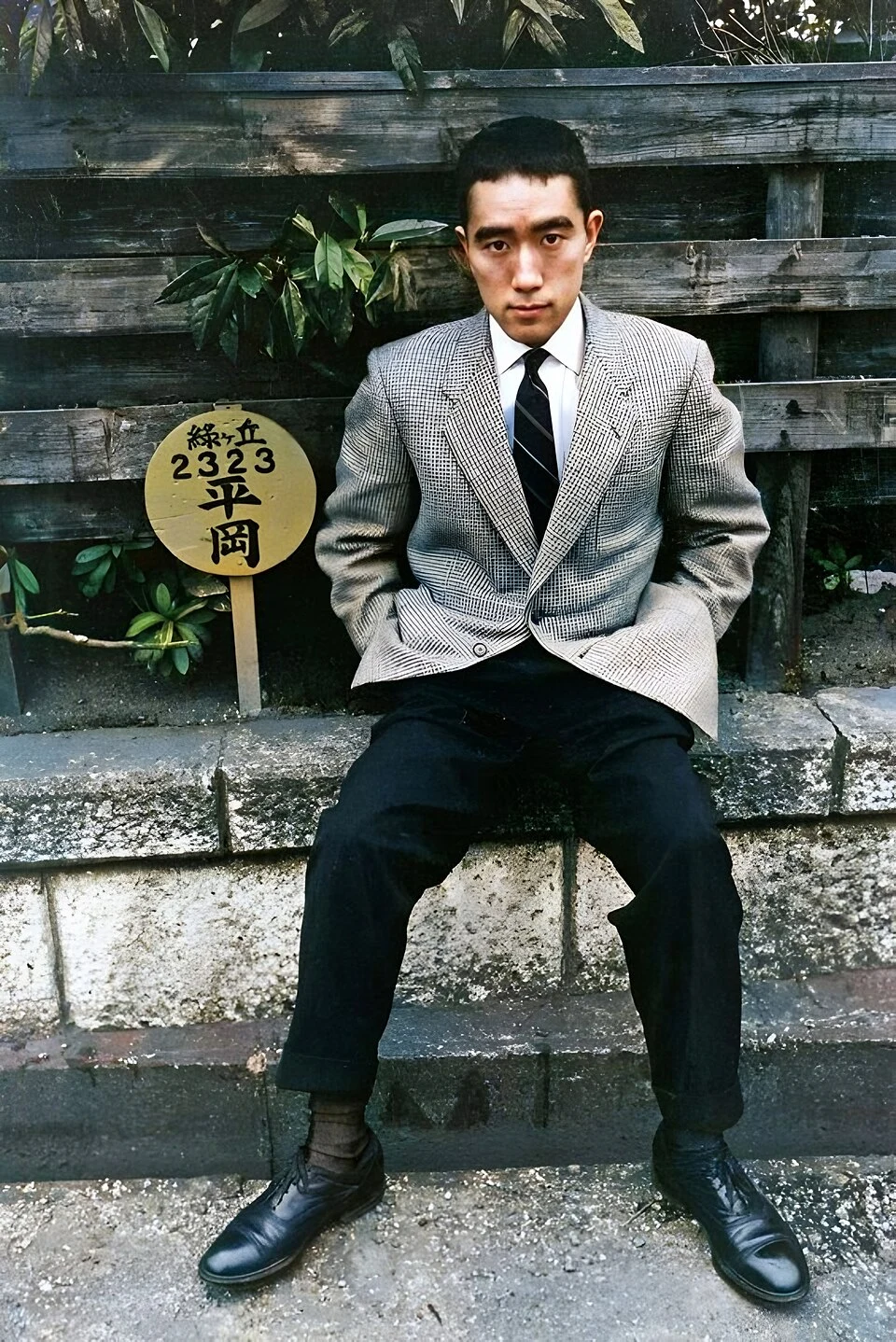
Kimitake Hiraoka alias Yukio Mishima probably reincarnates the perfect definition of artist, in terms of devotion, submission and complete sacrifice. A free narcissistic individual obsessed with aesthetic, sexuality and tradition and a self-destructive type able to talk to the masses in a very convincing way. Nowadays he could be pictured as a pure contradiction of homosexuality and far-right activism. Someone able to end his life in the most possible theatrical way doing Seppoku in front of an astonished audience. Tracing back his origins, it looks like Mishima's aristocratic family definitely shaped his view on modern Japan and his fragile health probably helped to fuel his obsession for the human body. His passion for literature started at an early age and his talent contributed to obtain the nomination of five Nobel prices, despite of never winning the price that went to his mentor Yasunari Kawabata. Confession of a Mask (1949) probably his most iconic novels, tells about the author childhood and the refusal he had to endure from the girl he likes that made him wear an hypothetical 'mask', a metaphor used to hide his homosexuality and attraction to death. Mishima was also a key figure for the development of Butoh dance in particular for his autobiographical novel Forbidden Colors (1951).
Ryuichi Sakamoto is the most acclaimed international well known composer Japan ever had. Coming from the University of Fine Arts and Music of Tokyo, he went through different stages, switching from electronic to movie soundtracks, both as solo musician and as a member of Yellow Magic Orchestra, an experimental electronic band inspired from the German band Kraftwerk. His biggest dogmatic goal was to make 'duty free music', music freed from every sort of involvement and compromise, promise that he fulfilled during his whole career that spanned for over 40 years. His most notable work as a solo artist is probably the soundtrack of Merry Christmas Mr. Lawrence (1983) starring David Bowie and including the song Forbidden Colors (another reference to Mishima) which earned him an oscar. His piano melodies walk on a fine balance between west and east, leaving the audience suspended between two magical nostalgic worlds and his fascination for the exotic also made him write him write two tribute albums to Tom Jobim.
The vastity of the Japanese cultural universe switches from cinema to literature to music but it also involves animation. The Studio Ghibli with its generous repertoire is another example of how incredibly artistically productive Japan is and how the creative potential of people like Hayao Miyazaki and Isao Takahata can shape the collective mindset and make adults also dream. Movies like My Neighbor Totoro (1988), Princess Monokoke (1997) and Spirited Away (2001) have become part of the collective identity of the country and also encountered international success winning numerous prices with a character like the monster Totoro becoming the mascotte of the studio. Despite of having worked with many different directors, most of the works were made by Miyazaki himself that had the idea of founding the studio after the success of his movie Nausicaä of the Valley of the Wind (1984) and was helped on the journey by the inseparable soundtracks of Joe Hisaishi. To give an idea of how big Studio Ghibli is in the far east, I think a comparison with Disney can be drawn. In fact a partnership between the two giants was formed in 1996, with Disney being the only distributor of Ghibli's movies abroad and also a financial partner for a quote around 10%. Unfortunately the last Studio Ghibli movie The Boy and the Heron was released in 2023 marking the end of an era, leaving a tangible mark that most people are able to recognize in various shops around the world and particularly in an amusement park that opened in Osaka in 2022.
There is a crazy visionary lady with red painted hair and a very interesting life in the Japanese Pop-Art world that for some reason was taken so seriously at the point of becoming one of the most selling female artist in the history of Japan and one of the most influential for a range of internationally acclaimed artists in the same field including Andy Warhol. Yayoi Kusama was born in 1929 in Nagano from a merchant family really into agricolture. In her childhood she developed enchantment for the unpretentiousness and humbleness of pumpkins, rejection for sex due to the morbid attitude of her father towards her and his numerous betrayals to her mother and intense hallucinations that strongly affected her life and probably inspired her extremely productive and obsessive art career. Kusama enjoyed good success in her native country and was somehow associated with the attempt of importing Surrealism in the country of Shūzō Takiguchi but this did not keep her from the intentions to emigrate to the shining skyscrapers of New York city and become part of the flourishing local art scene where she lived for about 15 years. At the time of her return to Japan, Kusama was in a state of depression that left her unable to do her job and decided to retreat into a psychiatric hospital where she basically had to restart her career from scratch and lived there till the end of her life in 2026. In my Japanese trip, one of the things on the agenda was the visit at the small island of Naoshima where some of Kusama's pumpkins are exhibited. Unfortunately I didn't make it there but my curiosity for this surrealistic island is still intact and hopefully I will have the chance to visit it soon.
There is also a crazy visionary man, with a very humble attitude, wearing casual everyday clothes that has much to do with Yayoi Kusama. His name is Keiichi Tanaami, he is a graphic designer and his art is mostly based on escapism. The trauma of the american bombing during WWII with images of cities on fire, destruction and his grandfather deformed gold-fish is showed in a more or less clear way in his colorful, dreamlike graphic artworks that paradoxically are also inspired by the american Pop Art of New York in the late '60s, a city that he learned to know well because of his frequent visits and where he has been in contact with Andy Warhol conception of art and marketing. Apparently Tanaami and Kusama had the chance to meet in their life: two contemporary sides of the same coin that left an artistic historical mark in the history of Japan.